Wandsworth Borough Sees Surge in Recycling Rate
Increase seen as levels for London overall drop to lowest for a decade
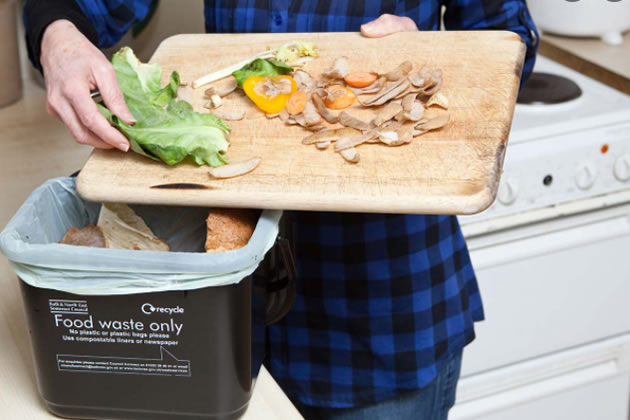
Introduction of food waste collection has helped boost recycling rates. Picture: Wandsworth Council
April 17, 2026
Wandsworth has recorded one of the sharpest improvements in recycling anywhere in England, according to new government data that shows London’s overall performance has once again flatlined.
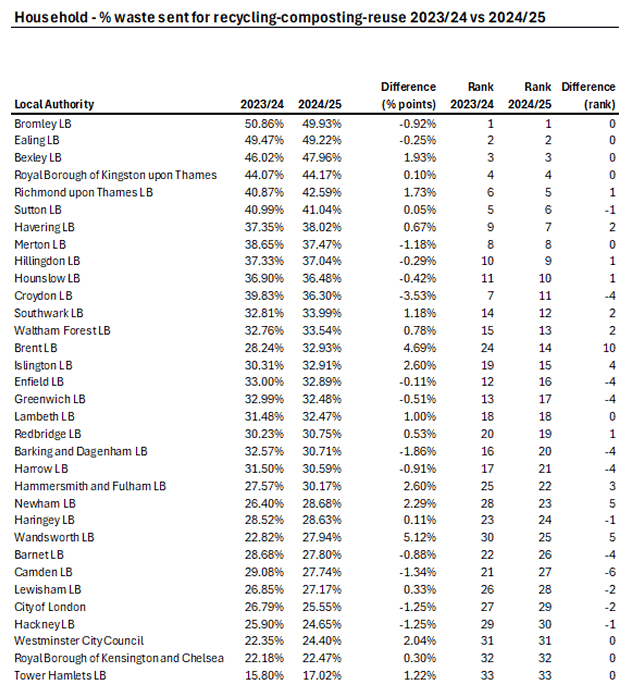
Figures for 2024/25, published on 31 March, reveal that London’s citywide recycling rate slipped marginally from 32.7% to 32.6% — its lowest level since 2016 and still the second-worst regional performance in England. But within that gloomy picture, Wandsworth stands out. The borough’s household recycling rate jumped by 5.1 percentage points, lifting it out of London’s bottom four and placing it among the top three biggest increases in the country.
Eleven London boroughs still recycle less than 30% of their waste, and none appear in England’s top 20 highest performers. Yet Wandsworth’s surge puts it alongside Cornwall and a handful of other authorities that have managed to buck the national trend. However, Wandsworth remains firmly in the bottom half of the table of London borough's well below the average rate for the capital.
While the government data does not attribute causes, several changes in Wandsworth over the past two years help explain the shift. The borough has expanded food waste collections to more households, including flats above shops and larger estates that historically had patchier provision. It has also rolled out new recycling containers designed to reduce contamination, replacing older boxes with lidded bins in many streets and introducing clearer signage on communal sites.
Alongside these service changes, the council has invested in behaviour-focused communications, including estate-level campaigns, targeted letters to households with high contamination rates, and clearer guidance on what can and cannot be recycled. Residents’ groups in areas such as Roehampton and Battersea have reported more visible engagement from waste officers, including door-knocking sessions and on-street advice during collection days.
Enforcement has also become more consistent. While Wandsworth has not adopted the stricter fines used in Wales and some English authorities, it has increased the use of warning stickers on contaminated bags and bins — a measure long recommended by campaigners. Officers say this has helped reduce the volume of recycling rejected at the depot, one of the biggest drags on borough-level performance.
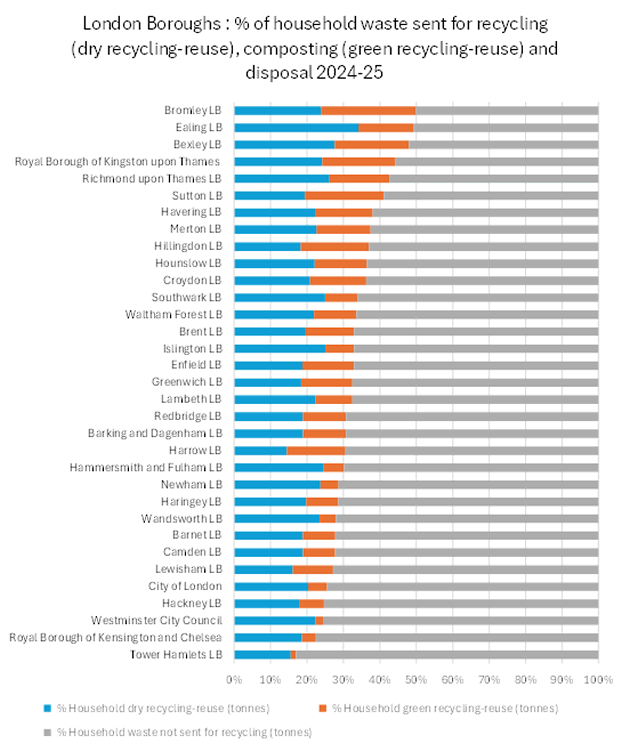
The improvement comes against a backdrop of mixed results across London. Bromley remains the capital’s best performer, though its rate dipped slightly below the 50% milestone it reached last year. Ealing continues to lead on “dry” recycling — paper, glass, metal and plastics — and collects the lowest amount of waste per person in England at just 201kg. Brent, meanwhile, has rebounded after an anomalously poor year, while Tower Hamlets remains at the bottom despite a modest increase.
Source: CPRE London
Alice Roberts of CPRE London, which compiles the annual London Boroughs Recycling Scorecard, said the capital’s long-term stagnation is avoidable. “We often hear London boroughs say it’s too hard to increase recycling rates in London. But that – and pardon the pun – is rubbish,” she said, calling for universal food waste collections, better public information and consistent enforcement.
The new data also highlights the capital’s unusually low waste generation. Nine of the 20 English authorities with the smallest amount of waste collected per person are London boroughs, including all of the six lowest. Wandsworth sits in the lower half of the table, reflecting both dense housing and the borough’s relatively high proportion of residents who walk, cycle or use public transport — factors that tend to reduce household waste.
Source: CPRE London
For Wandsworth, the challenge now is sustaining momentum. Campaigners want all boroughs to commit to recycling or composting 50% of household waste by 2030, with higher-performing areas aiming for 60%.
Residents can find full details of what can be recycled — and how to prepare items correctly — on the council’s website.
To check your collection schedule, visit the council’s waste and recycling services page.
Like Reading Articles Like This? Help Us Produce More This site remains committed to providing local community news and public interest journalism. Articles such as the one above are integral to what we do. We aim to feature as much as possible on local societies, charities based in the area, fundraising efforts by residents, community-based initiatives and even helping people find missing pets. We've always done that and won't be changing, in fact we'd like to do more. However, the readership that these stories generates is often below that needed to cover the cost of producing them. Our financial resources are limited and the local media environment is intensely competitive so there is a constraint on what we can do. We are therefore asking our readers to consider offering financial support to these efforts. Any money given will help support community and public interest news and the expansion of our coverage in this area. A suggested monthly payment is £8 but we would be grateful for any amount for instance if you think this site offers the equivalent value of a subscription to a daily printed newspaper you may wish to consider £20 per month. If neither of these amounts is suitable for you then contact info@neighbournet.com and we can set up an alternative. All payments are made through a secure web site. One-off donations are also appreciated. Choose The Amount You Wish To Contribute. If you do support us in this way we'd be interested to hear what kind of articles you would like to see more of on the site – send your suggestions to the editor. For businesses we offer the chance to be a corporate sponsor of community content on the site. For £30 plus VAT per month you will be the designated sponsor of at least one article a month with your logo appearing if supplied. If there is a specific community group or initiative you'd like to support we can make sure your sponsorship is featured on related content for a one off payment of £50 plus VAT. All payments are made through a secure web site. |
Related links
|
Wandsworth Residents Can Now Recycle More Items Recycling Collections Expanded for Flats Above Shops Lithium Battery Sparks Fire in Wandsworth Bin Lorry Wandsworth Council Steps Up Fly-tipping Enforcement Wandsworth Council Expands Recycling of Small Electricals Council Bin Lorries to Be Powered By Cooking Oil For more information about Wandsworth's waste and recycling services should call 020 8871 8558 or email wasteservices Register news from: |